
A place where you were stripped of the most basic measure of your identity and dignity. Your name was replaced by a number. The first lie was the words on the doors of the gate as you walked inside: “work will set you free”. Nothing could be further from the truth. No amount of work would release you from this hell. Sachsenhausen was one of the major concentration camps in Nazi Germany.
Nazi forces captured Stalin’s son and held him at Sachsenhausen. The Nazis tried exchanging him for a Nazi field Marshal, and Stalin famously said, “I will not trade a Marshal for a Lieutenant.” His son died in this camp.
Imagine a father who would not entertain saving his son’s life at any cost.
When looking at the dark side of humanity I often wonder, how does a person get to this point? Do all of us have a dark side stuffed so deep inside that we just don’t recognize it? History keeps repeating itself. We can see it happening today in Ukraine. Why can’t we recognize this dark side sooner? Why can’t it be contained? Why do these dark souls get in powerful positions and why do people continue to follow them?
The SS guards were as vile and reprehensible as any man could be. They were trained to extinguish empathy, compassion and sympathy. It was a direct order that if they felt sorrow or empathy for a person in the camp they must cause them physical pain.
We stood outside of a building known as “The Green Monster”. It was a dining room for the SS officers. A place where they ate rich food and even brought pretty German girls to dance. Prisoners served them here. On the surface, this might seem like one of the better jobs in the camp. As I stood there, I could almost see the evenings of drunken laughter playing out in front of me. I could almost smell the alcohol and cigarettes on their breath; they were in complete control and felt like gods with that SS uniform. Jehovah’s Witnesses were chosen with great intention for the job of serving the SS officers. They were imprisoned because they could never say that Hitler was the ultimate leader. In their minds, that was reserved for god. They are pacifist and refused to engage in the war. The SS knew this pacifism would serve them well because these were the men that would never poison them. One reason this was such a hard job was because they would see all this good food and could not eat it. Can you imagine starving to death and not being able to eat the abundance of food in front of you?
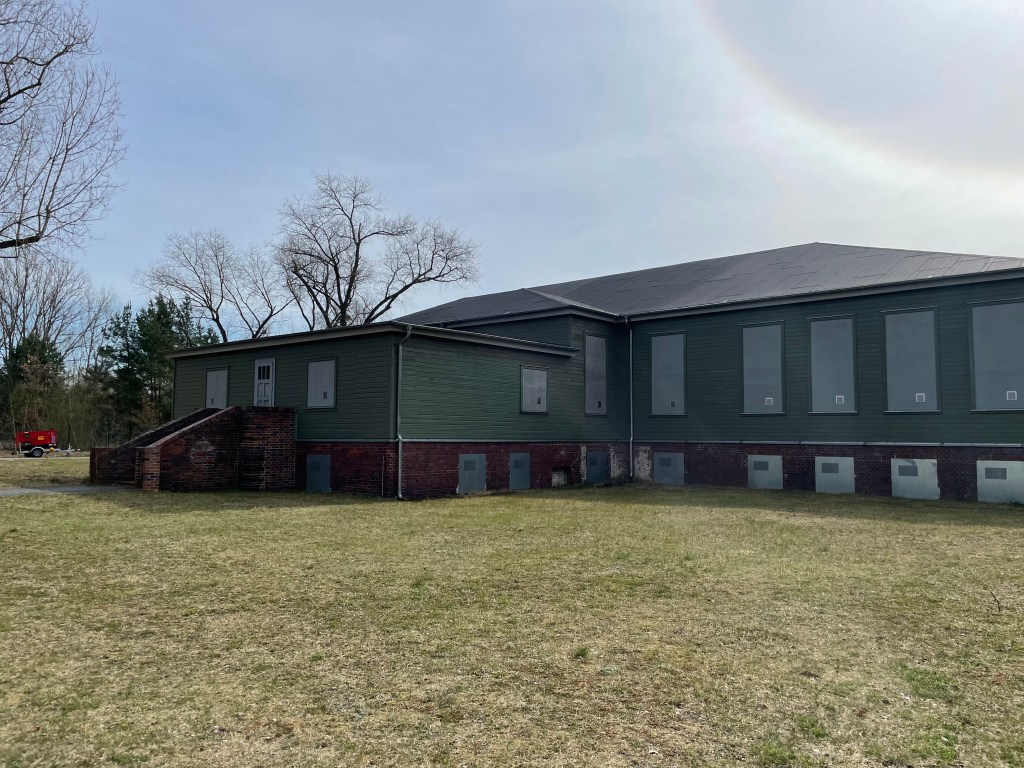
Occasionally, the SS would feel compassion for the men serving them. When this very natural human connection happened, and empathy gripped the SS officer, training would kick in. The SS would stand up, drag the Jehovah’s Witness outside, and brutally beat them. Not because they did anything wrong, but because the guard felt a shred of humanity.
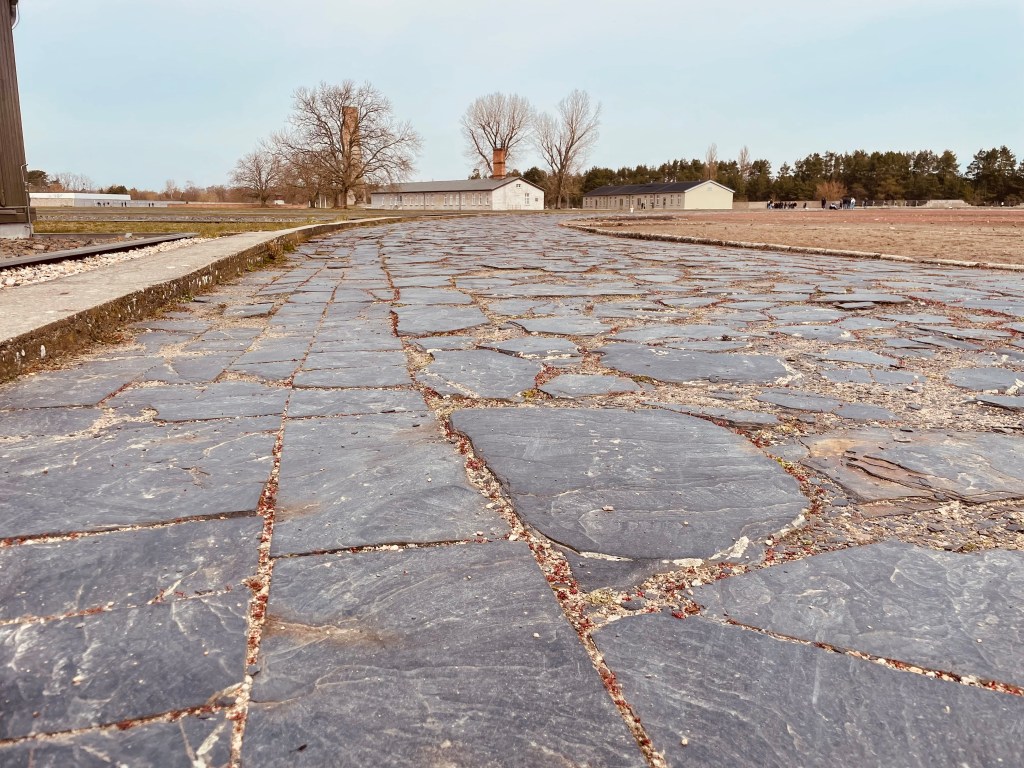
Every morning at 4:15am was roll call. Prisoners would receive their work detail the morning of without preparation. Shoes for the Nazi soldiers were manufactured at Sachsenhausen. The prisoners would be loaded down with the weight of a full military pack and sent to march all day in order to test the soles of the shoes, and make sure they were good enough for the Nazi soldiers. We stood on the path the prisoners were forced to run back and forth on. If you received shoes too big or small for you, that was your problem. Failure to have the endurance to run back and forth all day resulted in a severe beating at minimum, and in the worst case, murder.
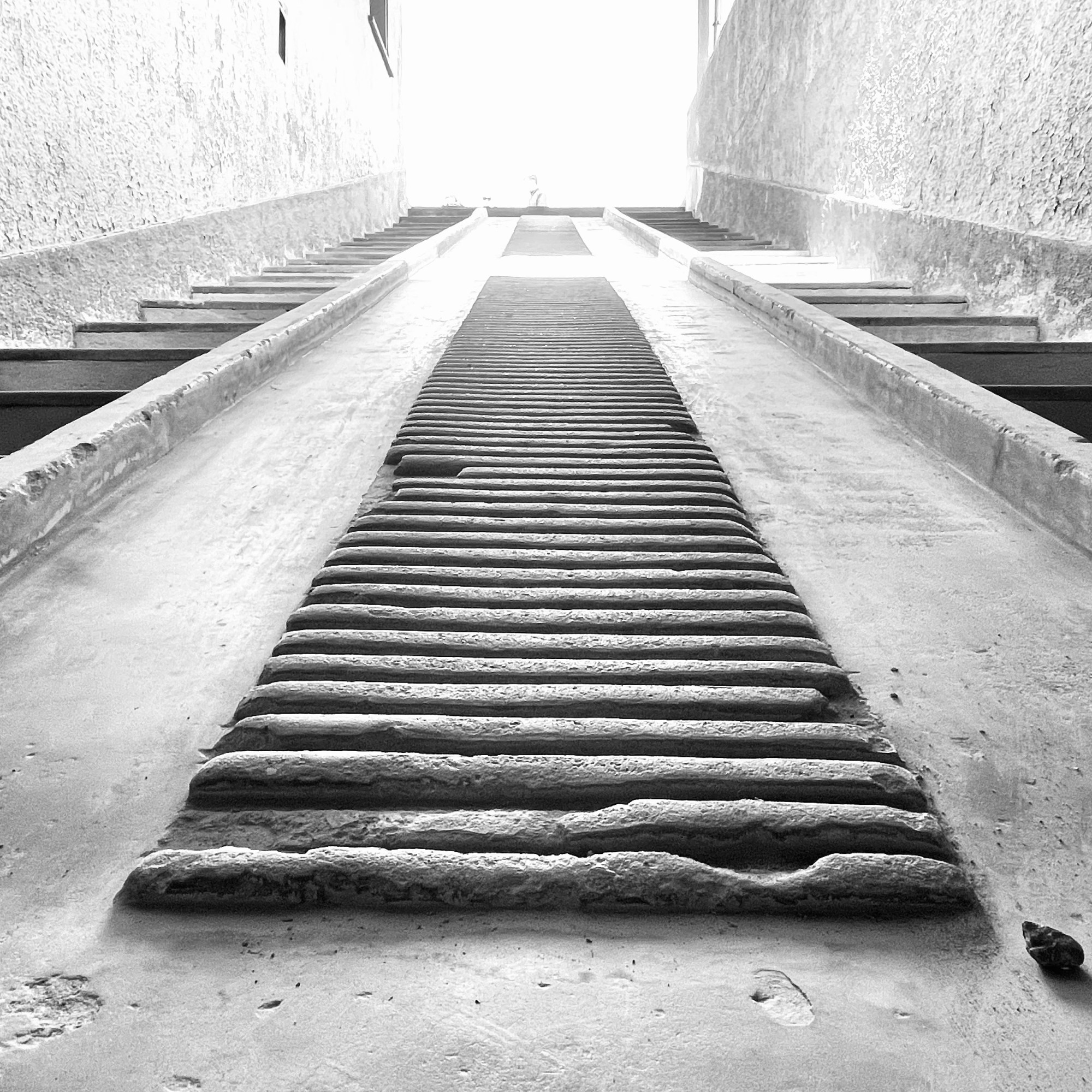
There was no shortage of medical experiments done at Sachsenhausen. The medical buildings were located near a morgue. There is a steep ramp that leads you to the basement of the morgue. The basement was cold, with shiny white tiles and arches spread across the room. It was alarmingly large. Soon, the bodies leftover from the experiments would become too much to dispose of efficiently, so Crematoriums were brought in after a truck full of bodies flipped in Berlin, exposing the horror.
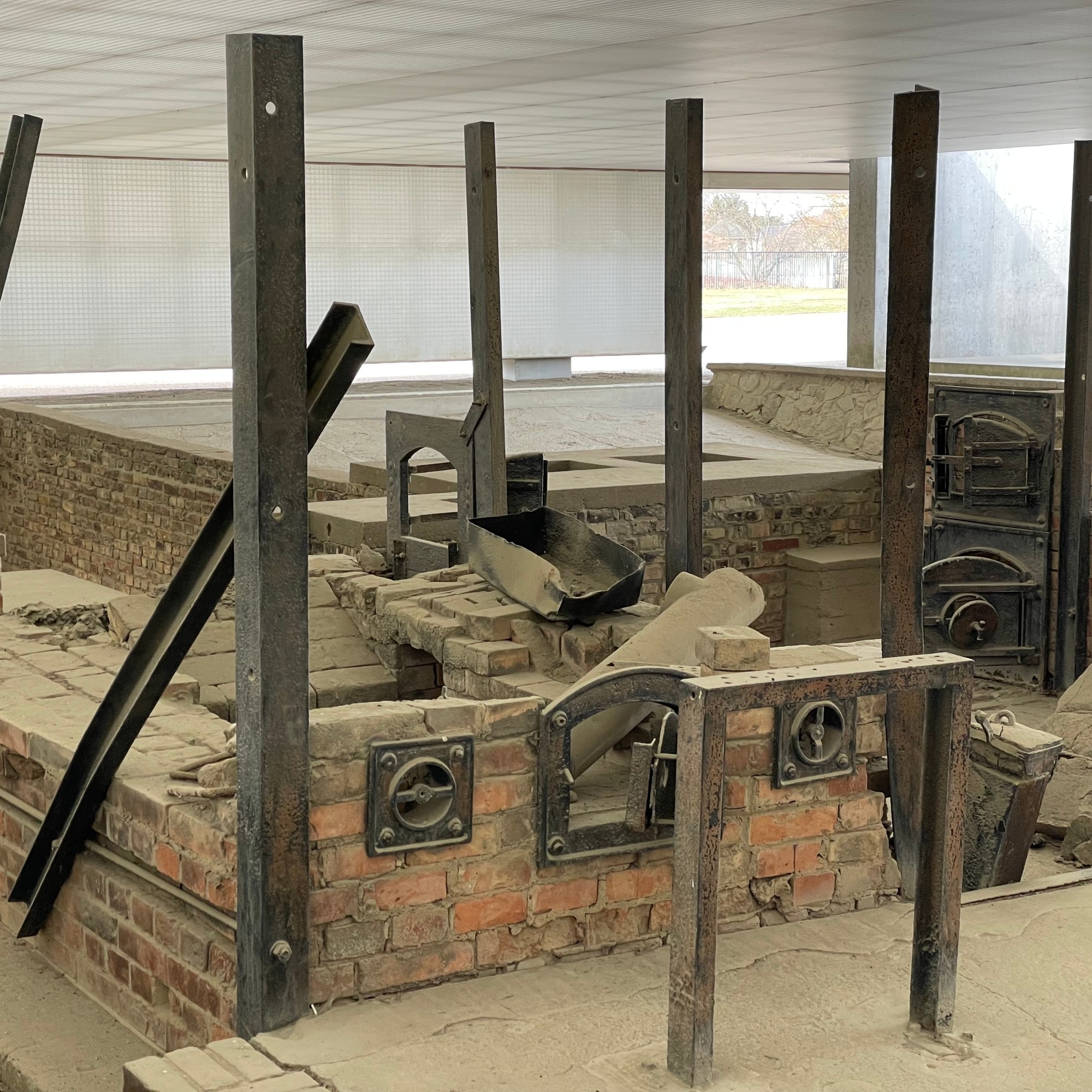
A homosexual German prisoner had the unfortunate job of dealing with the corpses. He said, “I wanted only to get away because of the smell of man’s flesh, of burning. It upset me so much that I always thought, this is so horrific. The worst thing of all was the crows, afterwards. There was a smell, so the birds, or the vultures I would call them – it drove me insane. And every day the dead.”
As the war raged on the Nazi’s built an industrial death complex, with gas chambers, and a room where the prisoners were told they were getting a medical examination.
The Soviet POW’s were killed under the guise of a medical examination. They all went into a room and were given a number. As they sat waiting, the Nazi’s turned the music up. They were called one by one into a room where hay lined the floor. They were asked to stand up against a wall to get measured. The music played loudly and their comrades sat waiting, unaware of what was to come. Behind the neck of the Soviet solider was a small hole. The barrel of a shot gun would slide into the hole and without warning, a bullet ripped through the Soviet’s neck and they would fall onto a bed of hay. A door would open and an SS member would remove the bloody hay and haul the body to the crematorium. The process took 3 minutes per killing.
This death complex was darkly and aptly named Station Z, the final letter of the alphabet.
In a twist of fate and poetic justice, Sachsenhausen was liberated by the Soviets – who were led by a man so evil he wouldn’t even save his own son. The Soviets used it as Special Camp 7 and imprisoned 60,000 German Nazis. Over 12,000 Nazi’s died between the years 1945-1950 in the camp they previously used to torment and murder people in.
 Off the Rails with Kelly